Research
|
|
|
|
Thermal Histories
Even though all volcanic rocks eventually cool, the way they do it results in fantastic morphologies and chemical patterns. My goal has been to identify what cooling histories result in easily identifiable characteristics of volcanic rocks and minerals.
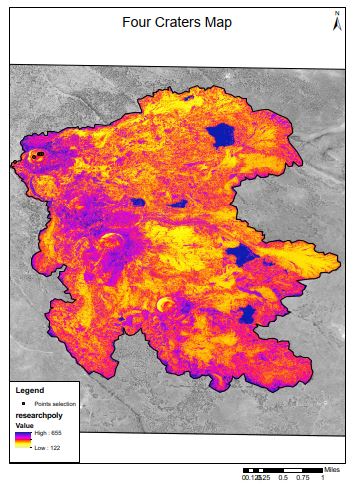
glass content from aboveVisualizing glass content across a lava flow would allow for understanding cooling environments across a lava field. This might show us where water or ice interacted with lava, or if hot spots persisted resulting in oxidation and alteration in certain spots.
Collaborators: Bailee Zinzer, Emily Forsberg, Frank Wroblewski, Sean Peters, Emily Thompson, James Wray |
|
|
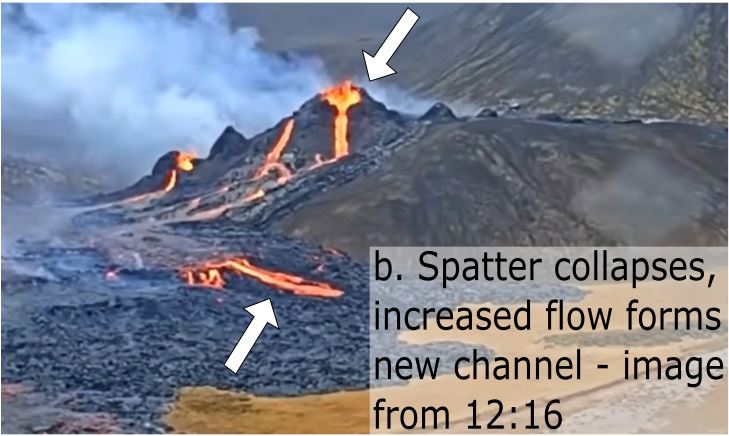
Eruption Dyanamics from live streamWith the livestream of the early stages of the Fagradalsfjall eruption in spring of 2021, we can study a relatively simple lava flow system. We can evaluate how processes at the vent, such as effusion rate and spatter wall collapse effects how the flow propagates downstream. This has implications for lava flow modeling to help forecast changes in downstream behavior when variability at the vent is noticed.
Collaborators: Sean Peters, Amanda Clarke, Mallory Ford |
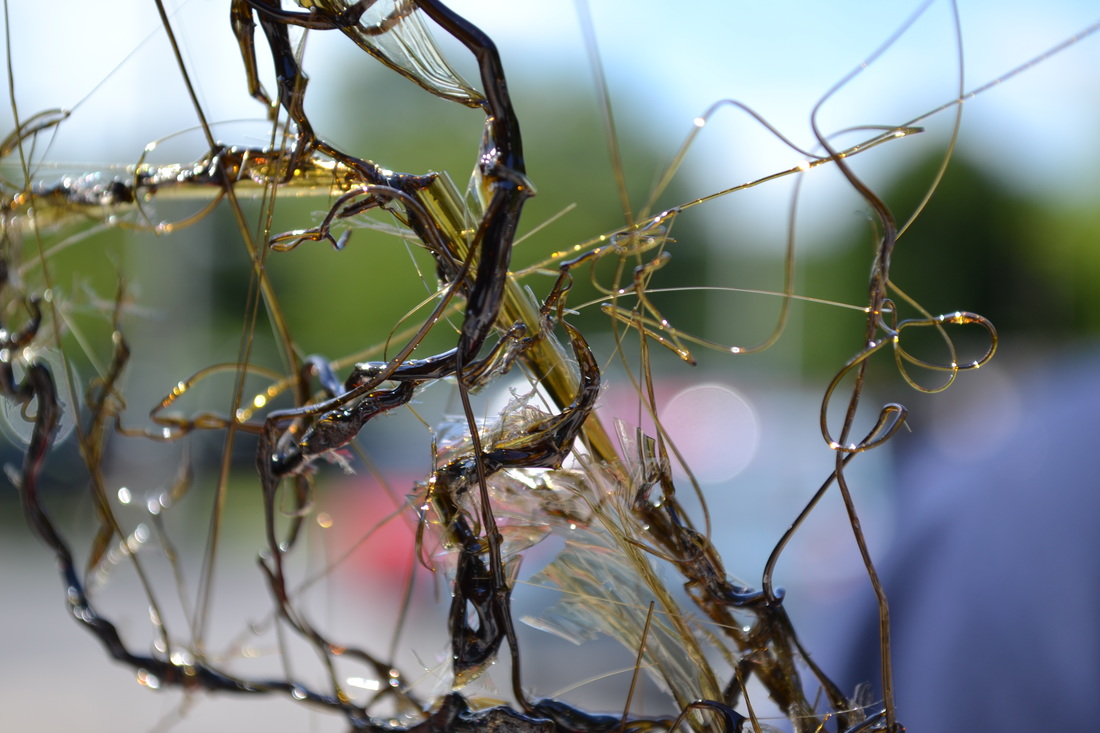
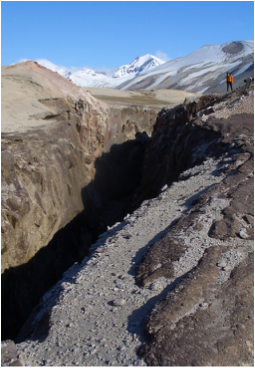
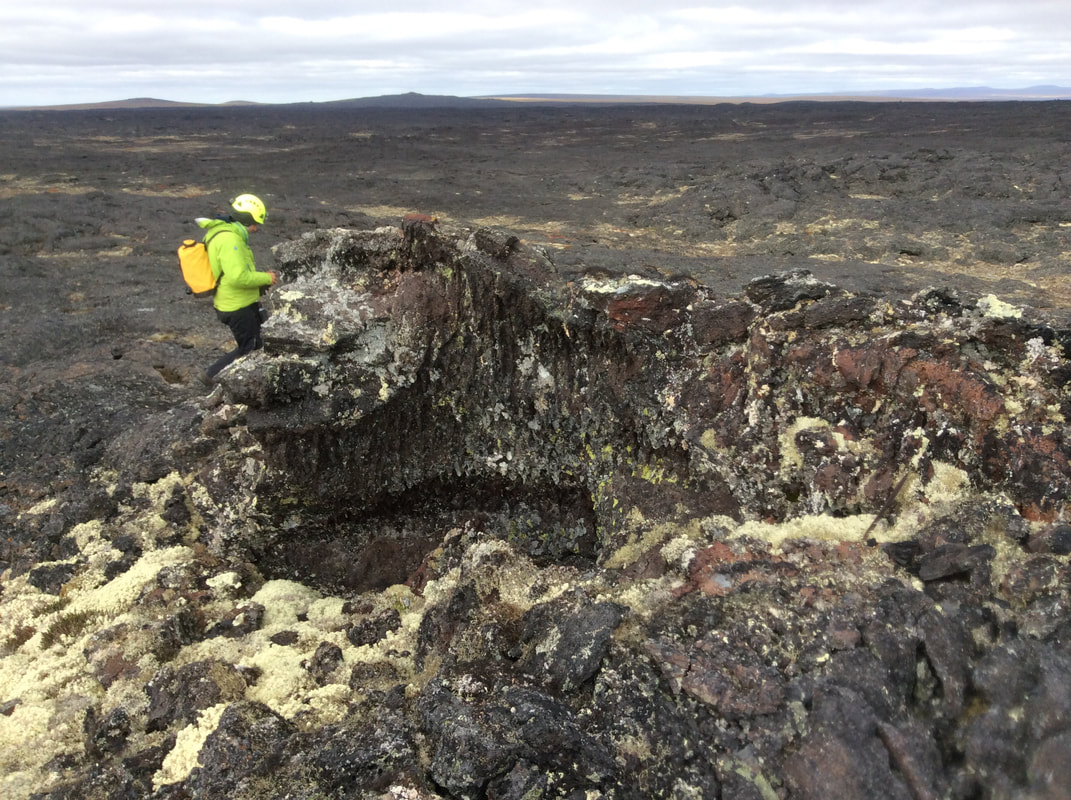
Lost Jim - Icy Eruption on Mars?This young lava flow is ~40 miles SW of Deering, AK and is a fantastic example of a lava flow that may have interacted with permafrost, snow, ice, and liquid water. Lava + water = super tiny crystals and lots of glass which we can see from space with satellites. We can compare what the Lost Jim flow looks like with lava flows on Mars to see where water or ice used to be when the lava flows erupted.
Collaborators: Jessica Larsen, Tim Orr |
|
|
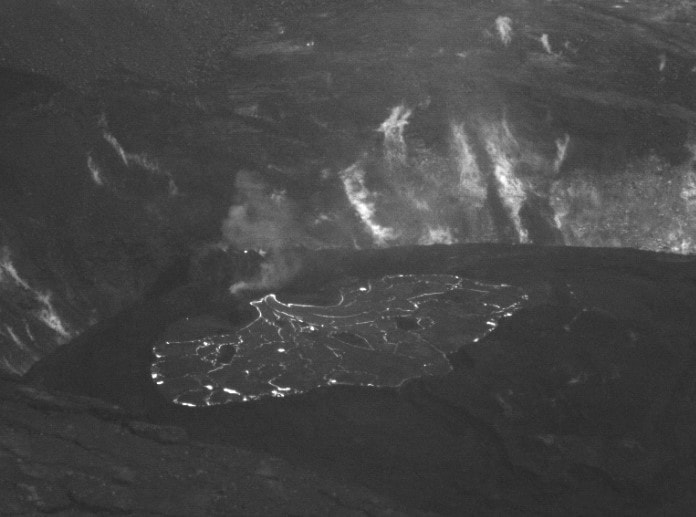
Rheological Imaging of Molten LavaLava is hot and dangerous! This project is working on developing a remote way to image lava and determine important rheological properties without physical sampling. A tool like this would allow eruption response managers to better forecast where lava will go and how quickly it will get there.
Collaborators: Matt Patrick, Tobias Fischer, Emily Forsberg, Leslie Baker |
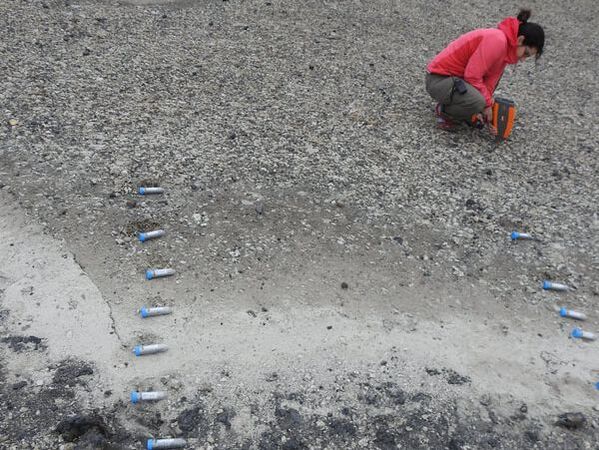
explosive eruptions and microbesVolcanic deposits are common on other planets and thus should be evaluated for habitability and water storage. This project focuses on what geological parameters (1) can be seen with remote sensing capabilities and (2) affect microbial communities which may drive sampling strategies for future missions to Mars. Field work was done near Askja Volcano in Iceland.
Collaborators: Amanda Stockton, Morgan Cable, Diana Gentry, Elena Amador, Anna Simpson, Scot Sutton, George Tan, Julia Fraser |
|
|
Spatter around the westThe shape and size of spatter clasts tell a tale of thermal evolution. Cool clasts from isolated blasts land as single bombs whereas hot clasts from continuous fountains can agglutinate into very dense deposits. We are conducting a survey of the morphologies of spatter deposits around the west including Idaho, Oregon, California, and Hawaii.
Collaborators: Kevin Cerna, David Cavell |
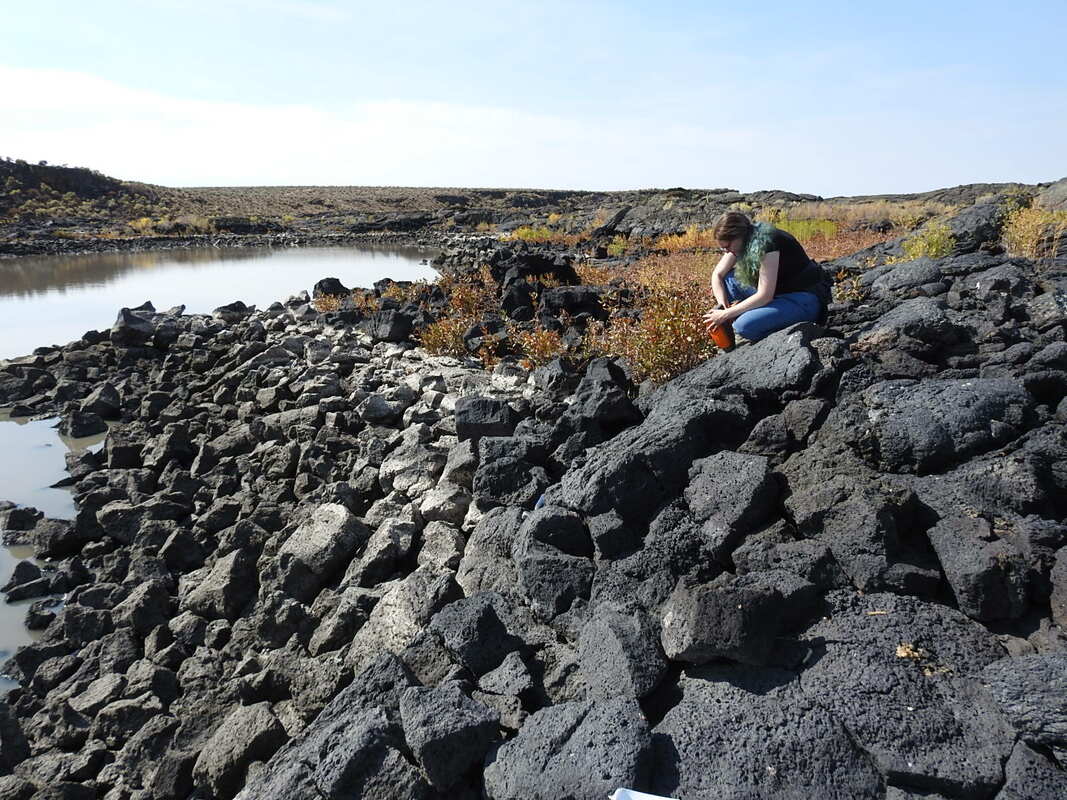
Vnir spectra of glassy lavaWater-lava interactions occur all over our planet, but only sometimes does that result in extreme weathering and alteration. Other times, it just results in glassier rims on the lava flow. We are studying lava flows which interacted with ice and water to see if these petrographic textures can be detected using spectrometers currently orbiting Mars. If so, we hope to help constrain the location, duration, and amount of water on the ancient Mars surface.
Collaborators: Alex Sehlke, Janice Bishop, Jennifer Heldmann, Tom Sisson, Sheridan Ackiss, Adrianne Reeder, Aly Doloughan, Kari Odegaard. |
|
|
|
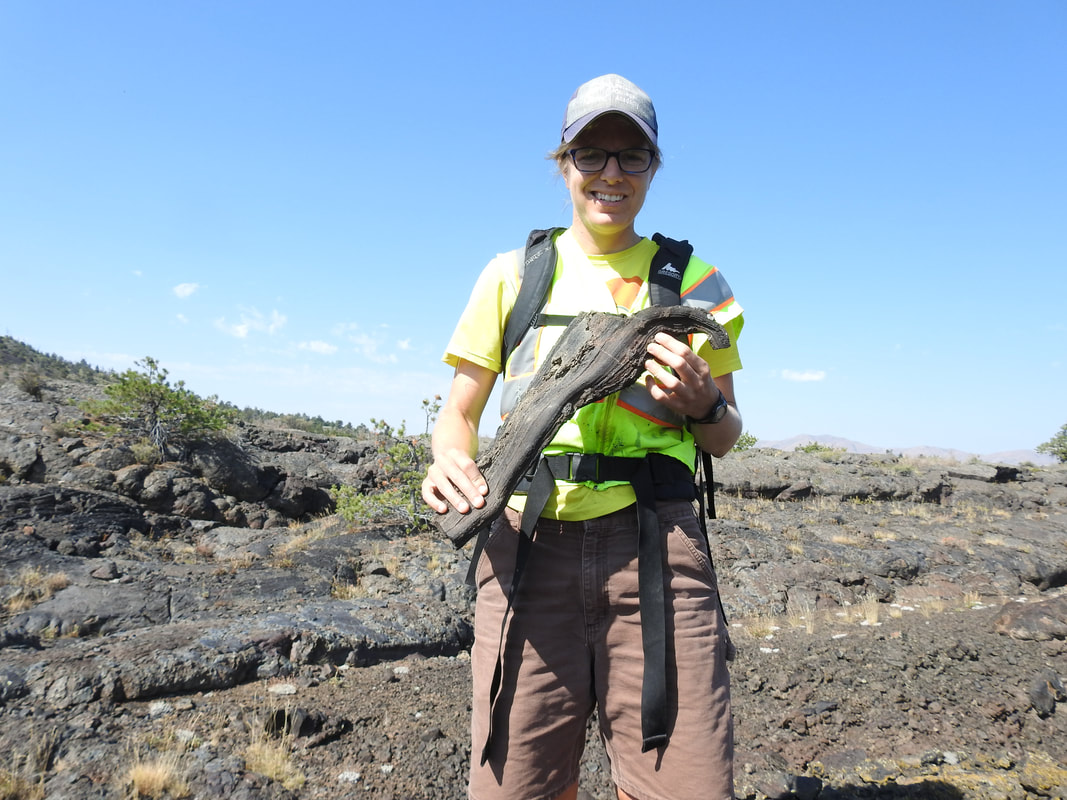
Lunar Spatter BombsWith the help of the Syracuse Lava Project and the FINESSE Project at NASA, I have been mimicking spatter bomb formation at Craters of the Moon National Monument to better understand the cooling history of spatter features on the Moon. Thermocouples measure the cooling rate of experimental deposits that I pile up, sometimes fast, sometimes slow.
Collaborators: FINESSE team, Syracuse Lava Project |
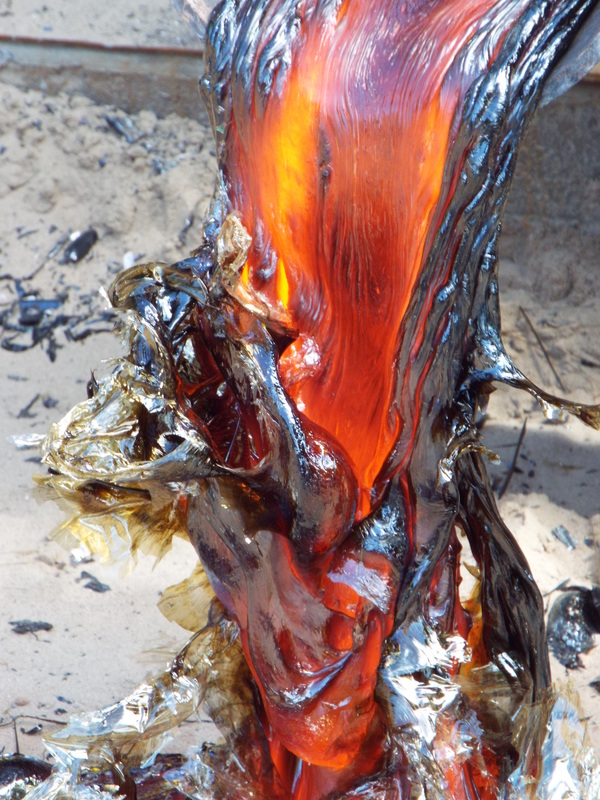
Deccan Trap Lava Flow SimulationPEG 600 wax can be used to simulate lava flows. By changing the temperature and flow rate, we can create different flow morphologies such as ropey pahoehoe or anastomosing toes. Older flows at the Deccan traps have predominantly compound morphologies, while upper units were emplaced as simple sheets. Our experiments will help constrain effusion rate changes during the 65 million year old eruption.
Collaborators: Sean Peters, Loyc Vanderkluysen, Amanda Clarke |
|
|
Scoria bombs at Tungurahua & Cotopaxi
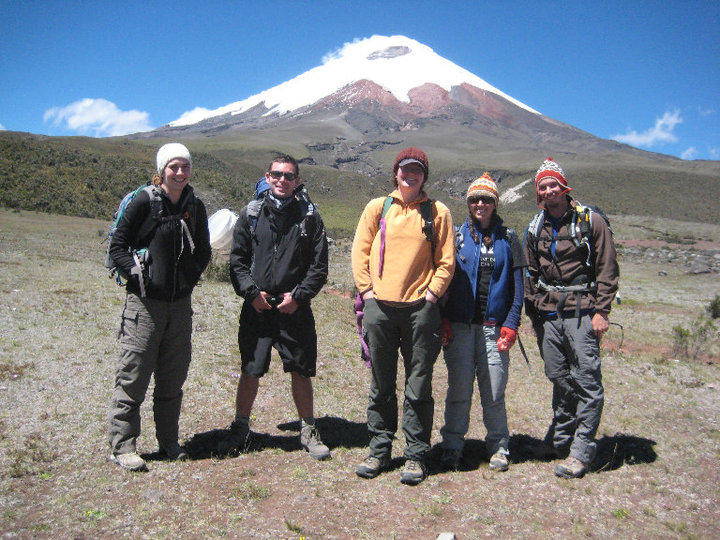
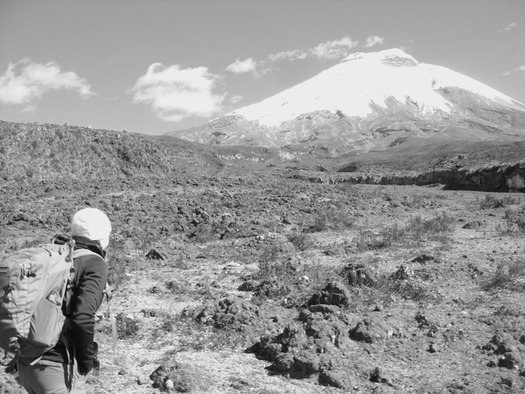
Paleomagnetism can be used to determine the highest temperature that a pyroclastic density current was when it came down the side of the volcano. These cauliflower-like scoria bombs are found at Tungurahua and Cotopaxi volcanoes in Ecuador and are characteristic to low-temperature pyroclastic flows.
Collaborators: Mary Benage, Dennis Geist, Josef Dufek, Madison Myers, John Geissman |
Experimental Spatter
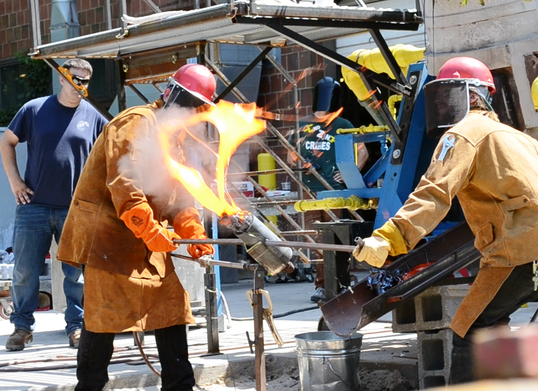
I have utilized the controlled environment of a furnace to simulate thermal conditions within spatter piles and quantify cooling rates between clasts. With the folks from the Syracuse Lava Project, artificial volcanic spatter can be created and the thermal progression of this fascinating deposit can be measured. Numerical modeling as well as empirical data show that accumulation rate of spatter clasts is directly related to the deposit morphology. This has been helpful for estimating eruption rates for extra-terrestrial volcanoes.
Collaborators: Karen Harpp, Ben Edwards |
|
|
CO2 in the Magma under westdahl
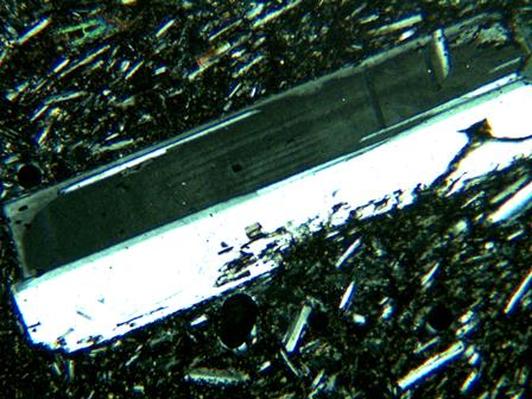
The ratio of CO2 to H2O in magma is very important for mineral phase stability. Plagioclase will grow at higher temperatures when CO2 is present. Using high-pressure, high-temperature experiments, I was able to figure out the range of plagioclase stability in intermediate-composition volcanoes (such as Westdahl in Alaska), which are have notoriously few melt inclusion to measure CO2.
Collaborators: Jessica Larsen, Pavel Izbekov, Owen Neill |
Galapagos geochemistry
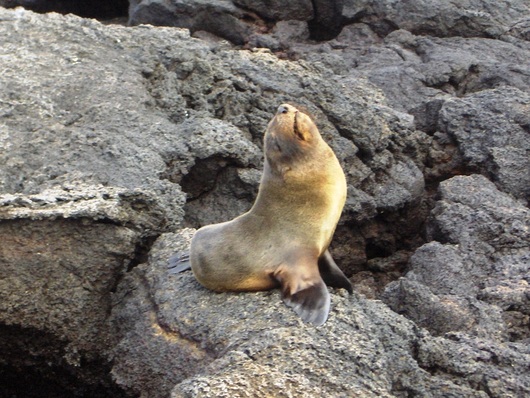
The 2006 Sierra Negra eruption in the Galapagos was recorded and sampled during the course of its nine days of effusion. Trace element analysis revealed a thermally stratified magma chamber which emptied top-down, erupting a slightly more evolved basalt in the first few days.
Collaborators: Karen Harpp, Dennis Geist, Bill Chadwick |
|
